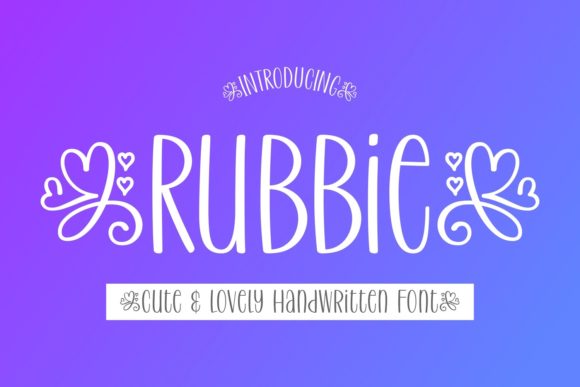
Rubbie: A Font That Makes Handmade Products Feel Special
I was sitting at my desk, staring at the mockup for a new candle label. The scent was “Woodland Moss,” and I wanted the label to feel earthy, charming, and a little bit magical. My usual clean sans serif font just wasn’t capturing the mood. It looked too modern, too sterile. Then I opened my font library and clicked on Rubbie. Instantly, the text “Woodland Moss” transformed. The quirky, rounded letters with their unique proportions felt friendly and organic. It wasn’t just a font anymore; it was the perfect voice for my product.
The Creative Personality of Rubbie
Rubbie is a display font with a distinct and masterful charm. It doesn’t shout; it whispers with character. Each letter feels thoughtfully crafted, with a balance of soft curves and sturdy structure that gives it a hand-crafted appeal. The overall mood is warm, approachable, and incredibly versatile. It can convey whimsy for a child’s birthday card, rustic elegance for a wedding welcome sign, or cozy authenticity for a batch of homemade cookie tags. Its visual personality is that of a trusted tool—a font that consistently elevates the design without overpowering the product itself.
Bringing Your Ideas to Life on Real Products
As a maker, seeing a design come off the printer or out of the cutting machine is the best part. Rubbie makes that moment even more rewarding. Here’s how it translates across different mediums.
For Labels, Tags, and Packaging
Physical product presentation is everything. A beautifully designed label can make a simple jar of honey or a bar of soap feel premium. Rubbie’s unique letterforms add a layer of perceived quality and care. I use it for my candle collection, soap labels, and boutique tea packaging. Because it’s a display font, it’s perfect for the product name or a short, evocative phrase like “Handmade with Love.” It draws the eye and creates immediate customer recognition on shelf or in an online shop image.
For Cards, Invitations, and Stationery
Whether it’s a wedding invitation suite or a set of seasonal greeting cards, typography sets the tone. Rubbie brings a joyful, celebratory feel to titles. “Save the Date” suddenly feels more playful and personal. For a farmhouse-style wedding, using Rubbie for the couple’s names on a welcome board creates a focal point that feels both elegant and relaxed. On printable planner pages or wall art quotes, it turns a functional item into a decorative piece.
For Wearables and Home Goods
When designing for mugs, tote bags, or t-shirts, readability on fabric or glaze is key. Rubbie’s clear, bold shapes translate beautifully onto these surfaces. I’ve tested it for vinyl cutouts for mugs and heat-transfer designs for totes. The letters hold their form well, even when scaled down for a smaller logo on a shirt sleeve. It adds a custom, artisanal feel to merchandise that mass-produced fonts often lack.
For Digital Downloads and Shop Materials
Even if your final product is a digital file—like a printable art PDF or a custom social media template—the preview and presentation matter. Using Rubbie in your listing images for digital downloads or on your shop’s branding materials (like a banner or watermark) creates a cohesive, professional aesthetic. It signals a creative, hands-on brand identity to your audience.
Practical Advice for Makers and Sellers
Using a font like Rubbie in a real business context requires a bit of practical thinking. Here’s what I’ve learned from applying it across my projects.
Best Uses: Short & Decorative
Rubbie is designed for display. This means it excels at short phrases, product names, titles, logos, and decorative wording. It’s ideal for that one line on your product that needs to pop. I wouldn’t use it for long paragraphs of body text on a brochure, as its unique style is best appreciated in focused applications. For a candle label, that’s the scent name. For a wedding sign, that’s the couple’s name. For a mug, that’s a single-word mantra like “Create.”
Readability on Physical Items
Always test your scale. Before committing to a batch of stickers or a run of engraved signs, print a sample. Check how Rubbie reads at the size you intend to use, especially on small items like bottle caps or detailed sticker sheets. Its open letterforms generally read well, but a quick test on your actual material—whether paper, vinyl, or fabric—is invaluable. For cutting machines, ensure your SVG or design file renders the font’s details clearly for a clean cut.
The Power of Font Pairing
Rubbie shines brightest when paired with a simpler font for supporting text. I almost always use it alongside a clean, neutral sans serif for body text, instructions, or details. For example, on a candle label, Rubbie is the scent name, and a simple sans serif lists the wax type and weight. This pairing creates a beautiful hierarchy: Rubbie provides the personality and emotional appeal, while the secondary font ensures all necessary information is easy to read. It can also pair wonderfully with a delicate script font for very elegant projects like wedding stationery.
Checking the Technical Details
Before using any font for physical products or digital items you sell, you must check its licensing. Confirm that Rubbie includes a commercial license that covers your use—selling stickers, mugs, printables, etc. Also, explore the font files themselves. Does it include alternate characters or ligatures that can add even more custom flair to a name or title? What file formats are provided? Ensuring you have the correct OTF or TTF files for your design software and that the font supports the characters you need is a crucial step. This technical due diligence protects your business and lets you use the font with confidence.
Rubbie has become more than just a font in my toolkit; it’s a creative collaborator. It has that rare quality of making a design feel finished, special, and truly handmade. From the first sketch on screen to the final product in a customer’s hands, it carries a warmth and character that paper, ink, and fabric seem to absorb. It turns a simple label into a story and a plain mug into a keepsake. For any maker looking to infuse their work with a touch of masterful, unique charm, exploring Rubbie is a very rewarding step.